A Day at Agricamp in Margahovit
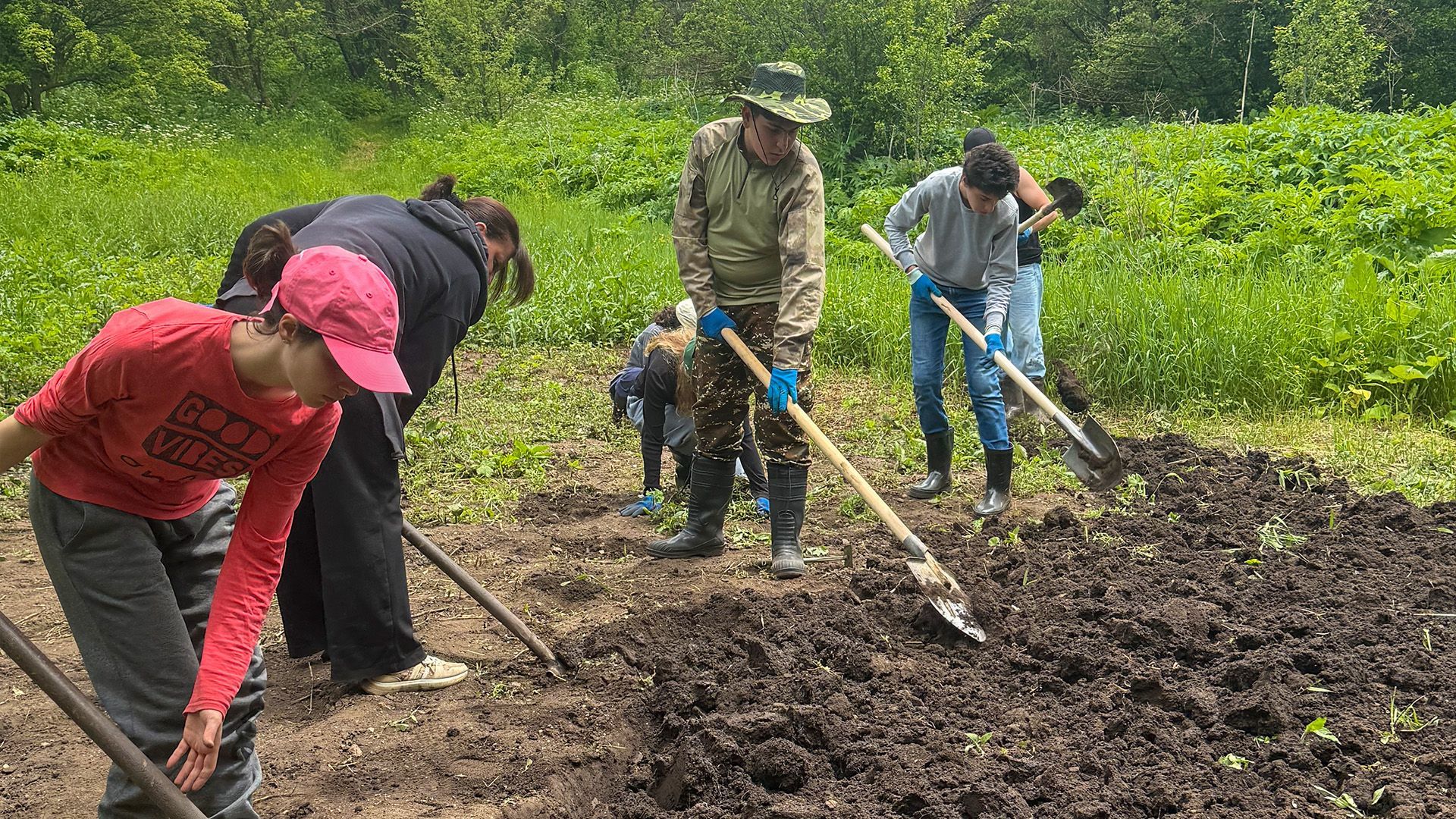
The Ohanian Environmental Educational Center in Margahovit was already full of activity long before the afternoon's Green Tour was set to begin. Home to Armenia Tree Project's Agricamp environmental education program, the center was hosting a group of 10th-grade students from the Waldorf School, who were busy preparing for another day of hands-on learning.
At the entrance, rain boots of every size—small, large, worn, muddy—were lined up near the door. Students moved in and out of the center, talking, organizing their belongings, and preparing for the day ahead. Some were getting ready for a visit to the Hrant Dink Forest, while others were checking bags or calling out to friends. Later that day, they would also visit ATP's Mirak Forestry Nursery to help with weeding and caring for young forest plants.
ATP staff were preparing to welcome visiting partners and friends for the afternoon, but for now the center belonged to the students. This was the Waldorf School's fourth consecutive year participating in Agricamp.
We sat down with Frau Gayane, the German teacher who accompanies them each year. Frau Gayane shares that the school first learned about Armenia Tree Project through one of the parents. Before coming to Armenia, they had taken students to Germany for similar agricultural programs, and after their first experience here, they continued returning.
“What brings us back again and again is the professionalism of ATP’s trainers and their warm attitude toward every student,” she says. “Very soon we are going to have a new school with a large territory, and what our students learn here will help us create and care for a beautiful garden of our own.”
For many of the students, Agricamp is their first opportunity to work in forests, nurseries, and gardens alongside ATP's environmental educators—experiences that are shaping how they think about nature, agriculture, and stewardship.
At ATP's Agricamp, students spend most of their days outdoors, learning directly from ATP foresters, horticulturists, and environmental educators.
Throughout the week, ATP specialists introduce students to a wide range of practical skills. They learn how trees are grafted, how pruning is done, and how young plants are cared for in the nursery. They also visit the Bee Center in Margahovit, where they are introduced to beekeeping and the important role of pollinators.
Students move between the center and the village itself, visiting homes where they help with watering, weeding, and caring for animals.
Beyond the practical skills, these experiences help students build responsibility, patience, and teamwork while developing a close connection to the land and the people who care for it. Over time, the center becomes something of a second home, where friendships grow alongside a deeper appreciation for nature.
Frau Gayane recalls a moment from two days earlier that stayed with her. During a visit to a local household, where the students were helping an elderly woman with gardening work she could no longer manage, one student—often considered restless at school—noticed the family's dog. The dog was tied with a short leash that had become too small and was visibly undernourished. The students gave it a nickname— “Chop” (meaning “stick”)—because of how thin it was.
The next day they collected money, bought food, a feeding bowl, and a new leash, and contacted the animal shelter Dingo. In the evening they were still talking about the dog and what more they could do.
Frau Gayane also mentions The Chorus, the French film the students are adapting for a stage performance at the Hovhannes Tumanyan Puppet Theatre. Rehearsals continue throughout the day, woven into camp life between gardening, village visits, and time in the center.
As we spoke with Frau Gayane, several students gradually gathered around us and joined the conversation. Mariam and Varduhi began sharing what had stayed with them from their days at Agricamp.
Varduhi spoke about the weeding work. She had to be very careful not to damage the small plants.
“I had seen my grandmother working in her garden, often bent over weeding, and I always thought it was just something usual,” she says. “I never really thought about how much effort it takes, or how careful you have to be not to harm even the smallest plants. Now I see it differently.”
Mariam shared another impression from visiting the Hrant Dink Forest.
“I always knew forests existed, but I never imagined people could create one,” she says. “I am amazed and proud that we have specialists in Armenia who can do this. Even if I choose a different profession, I know I will always support and volunteer for efforts that help green our country.”
Later in the day, the center filled once again with movement as students returned from their activities and visitors arrived. Without any announcement, the students naturally gathered and began performing excerpts from The Chorus for everyone present—their voices filling the center in the middle of an ordinary afternoon.
By the end of the day, it was clear that Agricamp is about far more than learning how to weed, graft trees, or care for seedlings. Through these experiences, students develop a lasting appreciation for the work behind healthy landscapes and begin to see themselves as future stewards of Armenia's natural environment.
About ATP's Eco Camps
ATP's Eco Camps typically last four to seven days, depending on the program. Each summer, around 70 students participate in ATP's multi-day Eco Camps, where they engage in intensive environmental education, hands-on activities, and leadership development. In addition, ATP's environmental education trainers contribute to camp sessions organized by partner organizations, including the Armenian Missionary Association of America's (AMAA) Shoghik Camp and other partner camps. Through these collaborations, ATP reaches more than 700 additional students each summer, significantly extending the impact of its environmental education programs.